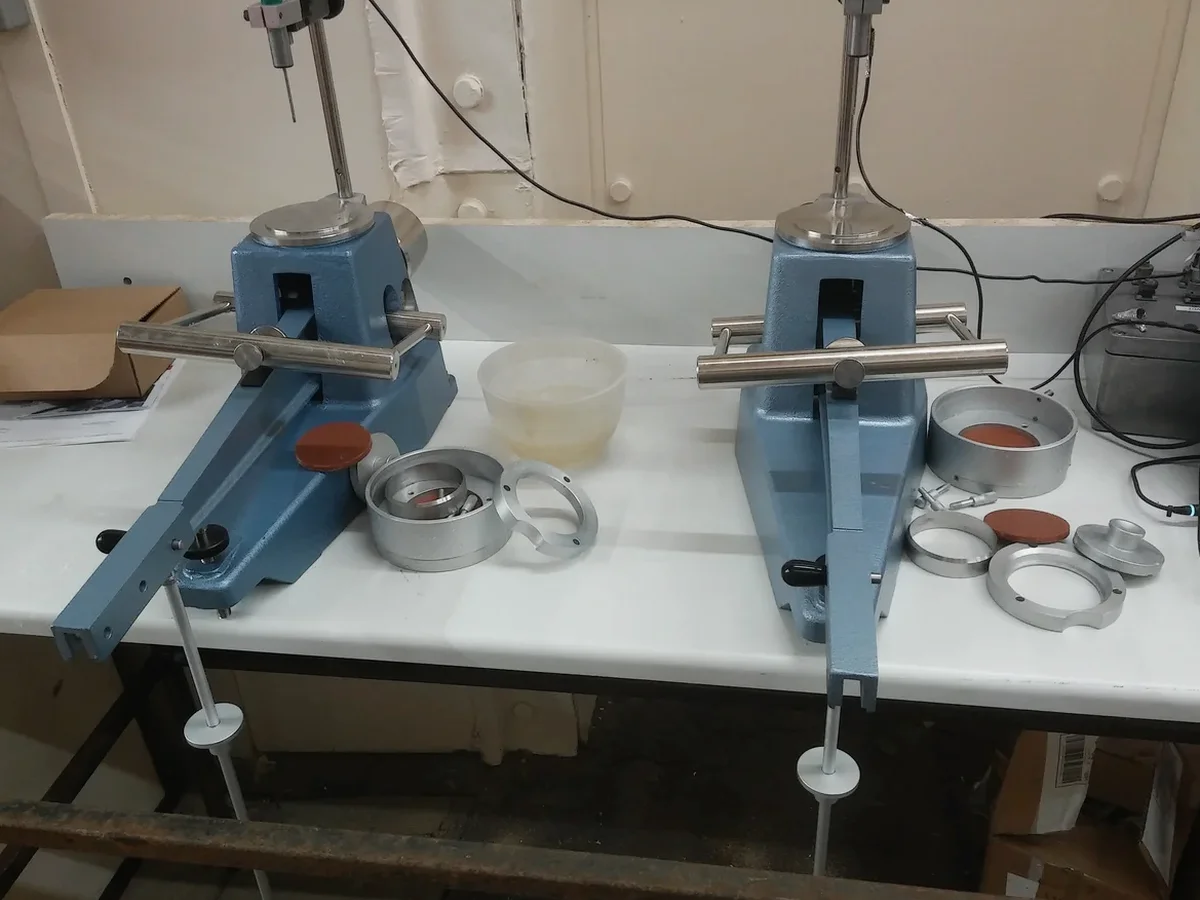
Geotechnical laboratory testing forms the backbone of safe and economical construction in Arlington, Virginia. The Laboratory category encompasses the full spectrum of physical and mechanical tests performed on soil and rock samples recovered from subsurface investigations. These tests yield the engineering parameters—strength, compressibility, permeability, and classification—that geotechnical engineers use to design foundations, retaining walls, pavements, and earthworks. In a dense urban environment like Arlington, where aging infrastructure, complex geology, and strict regulatory oversight converge, high-quality laboratory data is not merely beneficial; it is essential for managing risk, controlling costs, and complying with local building codes.
Arlington sits within the Piedmont physiographic province, underlain by deeply weathered metamorphic and igneous rocks of the Appalachian Piedmont. The residual soils derived from these parent materials—predominantly silty sands, sandy silts, and low-plasticity clays with variable amounts of mica—exhibit significant spatial variability and transitional boundaries with partially weathered rock (saprolite). This geological setting demands careful laboratory characterization to distinguish between soil-like and rock-like behavior. A thorough residual soil characterization program is often the first step in understanding the engineering properties of these locally derived materials, which can vary dramatically over short distances and depths.
The regulatory framework governing geotechnical laboratory work in Arlington is primarily drawn from the Virginia Uniform Statewide Building Code (USBC), which adopts and amends the International Building Code (IBC). Chapter 18 of the IBC, as modified by the Commonwealth of Virginia, sets forth requirements for geotechnical investigations, including the type and frequency of laboratory tests. Arlington County’s Department of Environmental solutions also enforces local ordinances related to grading, stormwater management, and erosion control that rely on laboratory-derived soil parameters. All testing must be performed by accredited laboratories in accordance with ASTM International standards, such as ASTM D422 for particle-size analysis, ASTM D4318 for Atterberg limits, and ASTM D698/D1557 for compaction testing. These standards ensure consistency, repeatability, and legal defensibility of the results.
The projects that most frequently require comprehensive laboratory testing in Arlington include mid-rise and high-rise commercial and residential buildings, public schools, utility installations, and transportation infrastructure. For any structure supported on shallow foundations, the soil mechanics study provides the bearing capacity and settlement predictions that directly influence foundation dimensions and reinforcement. Earthwork and site grading operations depend on compaction specifications validated through the Proctor test (Standard or Modified), which establishes the moisture-density relationship for the specific fill material being placed. Fine-grained soils common in the Piedmont residual profile must be carefully assessed for their plasticity characteristics, making the determination of Atterberg limits a routine yet critical component of any investigation. Whether it is a developer planning a mixed-use tower in Rosslyn or Arlington Public Schools evaluating a new elementary school site, the laboratory serves as the foundation for informed decision-making and code-compliant design.
A typical program includes moisture content, Atterberg limits, particle-size analysis, Proctor compaction tests, and strength tests such as unconfined compression or direct shear. For residual soils common in Arlington, additional characterization like slake durability or point load testing on weathered rock may be necessary. The specific suite is dictated by the project type, geologic setting, and applicable IBC requirements.
ASTM standards supply uniform procedures that ensure test results are reproducible, comparable, and legally defensible. The Virginia USBC explicitly references ASTM methods for geotechnical testing. Compliance with these standards is required by Arlington County for building permit applications and is essential for demonstrating that design parameters meet the code's performance-based criteria for foundation and earthwork design.
Arlington's residual soils often contain mica and exhibit relict structure from the parent rock, which can lead to anisotropic behavior and sample disturbance sensitivity. This necessitates careful handling and may require specialized tests beyond basic classification, such as triaxial compression with pore pressure measurement or consolidation tests, to capture the true engineering behavior that governs foundation performance.
Compaction tests, such as Standard or Modified Proctor, are required whenever structural fill is placed or existing soils are recompacted. This includes building pads, retaining wall backfill, utility trench backfill, and roadway subgrades. The Arlington County grading permit process mandates that fill compaction meet specified percentages of the maximum dry density determined in the laboratory, verified through field density testing.