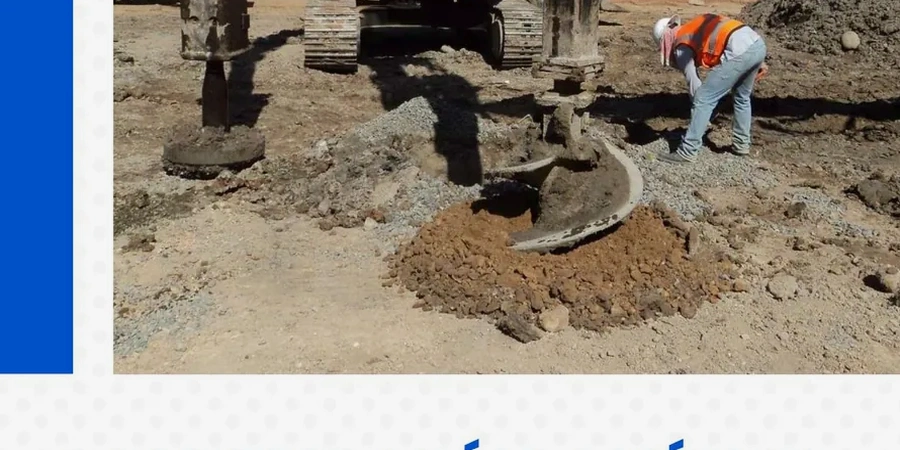
Ground improvement in Arlington, USA, encompasses a suite of geotechnical techniques designed to enhance the engineering properties of soil and fill materials to support structural loads safely and economically. In a region where rapid urbanization meets complex subsurface conditions, these methods are not merely optional — they are essential to the long-term performance of infrastructure. From commercial developments in Rosslyn to utility upgrades near Reagan National Airport, the ability to modify weak or compressible ground directly influences project feasibility, schedule, and risk management. This category covers everything from densification and reinforcement to drainage and stiffness enhancement, providing tailored solutions for Arlington's unique geotechnical challenges.
Arlington County sits within the Coastal Plain and Piedmont physiographic provinces, creating a transitional geology that often surprises developers. Much of the eastern and central portions of the county are underlain by Potomac Group formations — interbedded sands, silts, and clays — frequently mantled by artificial fill and alluvial deposits. These native soils can exhibit low bearing capacity, high compressibility, and variable permeability. Additionally, historic waterfront and stream valley modifications have left pockets of undocumented fill, organic silts, and loose granular layers that are prone to settlement and, in some cases, static liquefaction. Understanding this stratigraphic variability is the foundation of any successful ground improvement program in Arlington.
Design and execution of ground improvement in the United States must align with national standards and local building code requirements. The primary reference is the unsaturated soil analysis framework within the context of the International Building Code (IBC), as adopted and amended by Arlington County. The Virginia Uniform Statewide Building Code (USBC) governs construction, while geotechnical investigations follow guidelines from the American Society of Civil Engineers (ASCE) and the Federal Highway Administration (FHWA) for transportation projects. Key design parameters are often validated through field testing programs compliant with ASTM standards, and for sites involving waste or contaminated materials, landfill geotechnics protocols under the Resource Conservation and Recovery Act (RCRA) Subtitle D may apply, ensuring environmental protection alongside structural stability.
The types of projects that demand ground improvement in Arlington are diverse and growing. High-density mixed-use buildings with multiple basement levels often require excavation support and base stabilization where soft clays are encountered. Transportation infrastructure, including Metro corridor expansions and bridge approaches, routinely specifies stone column design to mitigate settlement and improve drainage. Industrial and energy projects on reclaimed land may call for vibrocompaction design to densify loose sands before construction. Even municipal projects like stormwater management facilities and park restorations benefit from specialized techniques such as preloading design to accelerate consolidation without the need for heavy surcharge, minimizing construction timelines in constrained urban sites.
Arlington's transitional geology features compressible clays, loose alluvial sands, and undocumented artificial fill. These soils often have low bearing capacity, high settlement potential, and variable permeability. Ground improvement becomes necessary when the native ground cannot support design loads without excessive total or differential settlement, or when stability against bearing failure or liquefaction is required by the Virginia USBC.
Ground improvement in Arlington must comply with the Virginia Uniform Statewide Building Code (USBC), which adopts the International Building Code (IBC) with county-specific amendments. Geotechnical design follows ASCE and FHWA guidelines, while field testing adheres to ASTM standards. For sites with waste materials, RCRA Subtitle D regulations also apply to ensure environmental safety.
The selection process begins with a comprehensive geotechnical investigation to characterize soil stratigraphy, strength, compressibility, and groundwater conditions. This data is evaluated against structural requirements, settlement tolerances, site access constraints, and environmental considerations. A comparative analysis of feasible techniques — such as densification, reinforcement, or preloading — is then conducted to optimize performance, schedule, and cost-effectiveness for the specific Arlington site.
When designed and executed properly, ground improvement in Arlington provides reliable long-term performance, reducing post-construction settlement to acceptable limits and enhancing bearing capacity. Performance is verified through post-treatment testing and, where specified, long-term monitoring with geotechnical instrumentation. The durability of the improvement depends on the technique used, soil conditions, and groundwater fluctuations, all of which are addressed during the design phase.